

Implementation and Predictors of Pharmaceutical Care Practices for Chronic Disease Management among Community Pharmacists in Southern Nigeria
Barre latérale de l'article
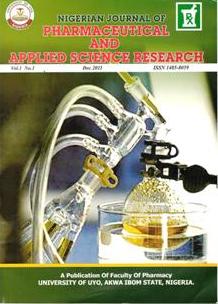
Contenu principal de l'article
Résumé
Background: Chronic non-communicable diseases constitute a major public health challenge, particularly in low- and middle-income countries where access to continuous, patient-centered care remains limited. Community pharmacists are strategically positioned to support chronic disease management through the delivery of pharmaceutical care services. This study evaluated the implementation of pharmaceutical care services for chronic disease management in community pharmacies in Southern Nigeria and identify factors associated with advanced pharmaceutical care practices.
Methods: A descriptive cross-sectional study was conducted among licensed community pharmacists practicing in registered community pharmacies in Uyo metropolis, Akwa Ibom State, Nigeria. Data were collected using a validated 66-item structured questionnaire assessing pharmaceutical care activities, professional confidence, and practice infrastructure. Descriptive statistics were used to summarize the data, while multivariable binary logistic regression was employed to identify factors associated with the implementation of advanced pharmaceutical care practices. Statistical significance was set at p < 0.05.
Results: A total of 153 pharmacists participated in the study. 26.1% maintained patient medical records, 35.9% routinely assessed medication adherence, 39.9% screened for concurrent herbal medicine use, and 11.8% assessed medication affordability. Pharmacists with postgraduate or fellowship qualifications were significantly more likely to assess medication adherence (adjusted odds ratio [AOR] = 5.84, 95% confidence interval [CI]: 2.61–13.08; p < 0.001) and screen for herbal medicine use (AOR = 3.42, 95% CI: 1.64–7.12; p = 0.001) than those with undergraduate qualifications. Years of professional practice were not significantly associated with implementation of advanced pharmaceutical care activities.
Téléchargements
Renseignements sur l'article

Cette œuvre est sous licence Creative Commons Attribution - Pas d'Utilisation Commerciale - Pas de Modification 4.0 International.
Références
AbuRuz S, Al-Ghazawi M, Snyder A. Pharmaceutical care in a community-based practice setting in Jordan: where are we now with our attitudes and perceived barriers? Int J Pharm Pract. 2012; 20(2):71-79. doi:10.1111/j.2042-7174.2011.00164.x
Amibor KC, Okonta C. Attitude and practice of community pharmacists towards pharmaceutical care in Nigeria. J Drug Deliv Ther. 2019; 9(6-s):164-171. doi:10.22270/jddt.v9i6-s.3786
Cheema E, Sutcliffe P, Singer DR. The impact of pharmacist-led interventions on control of blood pressure in patients with hypertension: a systematic review and meta-analysis of randomized controlled trials. Br J Clin Pharmacol. 2014; 78(6):1238-1247. doi:10.1111/bcp.12452
Cipolle RJ, Strand LM, Morley PC. Pharmaceutical Care Practice: The Patient-Centered Approach to Medication Management Services. 3rd ed. McGraw-Hill Medical; 2012.
El Hajj MS, Salem S, Mansoor H. Public’s attitudes towards community pharmacy in Qatar: a pilot study. Patient Prefer Adherence. 2011; 5:405-422. doi:10.2147/PPA.S22117
Hepler CD, Strand LM. Opportunities and responsibilities in pharmaceutical care. Am J Hosp Pharm. 1990; 47(3):533-543. doi:10.1093/ajhp/47.3.533
International Pharmaceutical Federation (FIP). Developing Pharmacy Practice: A Focus on Patient Care. World Health Organization; 2005.
Loh P, Chua SS, Karuppannan M. The extent and barriers in providing pharmaceutical care services by community pharmacists in Malaysia: a cross-sectional study. BMC Health Serv Res. 2021; 21(1):822. doi:10.1186/s12913-021-06820-7
Nkansah N, Mostovetsky O, Yu C, Chheng T, Beney J, Bero L. Effect of outpatient pharmacists' non-dispensing roles on patient clinical outcomes: a systematic review. Cochrane Database Syst Rev. 2010 ;(7):CD000336. doi:10.1002/14651858.CD000336.pub2
Oparah AC, Eferakeya AE. Attitudes of Nigerian pharmacists towards pharmaceutical care. Pharm World Sci. 2005; 27(3):208-214. doi:10.1007/s11096-004-2268-2
Oreagba IA, Oshikoya KA, Amachree M. Herbal medicine use among urban residents in Lagos, Nigeria. BMC Complement Altern Med. 2011; 11:117. doi:10.1186/1472-6882-11-117
Sholabi O, Akinbitan A. Structural barriers to contemporary pharmaceutical service delivery configurations in Nigeria. Niger J Pharm Pract. 2022; 16(1):34-45.
Strand LM, Cipolle RJ, Morley PC, Frakes MJ. The impact of pharmaceutical care practice on the practitioner and the patient in the ambulatory practice setting: twenty-five years of experience. Curr Pharm Des. 2004; 10(31):3987-4001. doi:10.2174/1381612043382627
Tsuyuki RT, Al Hamarneh YN, Jones CA, Hemmelgarn BR. The effectiveness of pharmacist interventions on cardiovascular risk: the multicenter randomized controlled RxEACH trial. J Am Coll Cardiol. 2015; 66(24):2846-2854. doi:10.1016/j.jacc.2015.10.080
World Health Organization. Non-communicable Diseases Country Profiles. World Health Organization; 2023