

Self-Medication Practices with Over-the-Counter Drugs among Pharmacy Students in South- South Nigeria
Barre latérale de l'article
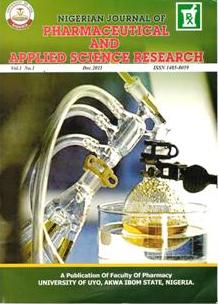
Contenu principal de l'article
Résumé
Background: Self-medication with Over-the-Counter (OTC) drugs is increasingly practiced among university students, including those in health-related disciplines. This study was conducted to evaluate the knowledge, attitudes, and self-medication practices with OTC drugs among pharmacy students in the University of Benin (UNIBEN).
Methods: A descriptive cross-sectional study was conducted among 400–600 level pharmacy students using a structured, self-administered questionnaire based on the Knowledge, Attitude and Practice (KAP) model. Stratified random sampling was used to select participants. Data were analyzed using SPSS version 25, utilizing descriptive statistics and chi-square tests to assess associations between socio-demographic variables and KAP components. Ethical approval was obtained from the Faculty of Pharmacy Ethics Committee.
Results: Findings revealed that a large proportion of respondents (98.1%) demonstrated good knowledge of OTC drugs. Most students (99.6%) exhibited positive attitudes toward responsible self-medication, acknowledging the pharmacist’s role in ensuring drug safety. However, a considerable proportion (82.2%) reported practicing self-medication within the past three months without professional consultation, while 34.1% admitted increasing drug doses beyond recommended limits. Chi-square analysis showed no statistically significant association between socio-demographic variables and respondents’ knowledge or attitude toward OTC drug use (p > 0.05).
Conclusion: Pharmacy students demonstrated high knowledge and positive attitudes regarding OTC drug use but engaged in risky self-medication practices, indicating a persistent knowledge gap. Strengthening drug-safety education and enforcing OTC regulations is recommended.
Téléchargements
Renseignements sur l'article

Cette œuvre est sous licence Creative Commons Attribution - Pas d'Utilisation Commerciale - Pas de Modification 4.0 International.
Références
World Health Organization. Self-care for health: A handbook for community health workers and volunteers. Geneva: WHO Press; 2021.
Samorinha C, Saidawi W, Saddik B, Abduelkarem AR, Alzoubi KH, Abu-Gharbieh E, et al. Exploring the global landscape of self-medication among students: trends, risks and recommendations for safe. Pharm Pract. 2024;22(1):1–14.
Martins A, Gama AC, Correia T. Knowledge and awareness of drug–drug interactions among pharmacy students: a cross-sectional study. J Pharm Educ Pract. 2019;7(3):44–51.
Ahmed A, Ali N, Shahid S, Khalid A, Malik R, Akram H. Knowledge, attitudes and s regarding self-medication among pharmacy and medical students. BMC Health Serv Res. 2022;22(1):1455.
Abu-Dahab R, Al-Khader D, Qudah M, Al-Muhaisen S, Zakaraya M. Self-medication s among pharmacy students in Jordan. Int J Pharm Pract. 2020;28(6):602–10.
Alsous M, Elayeh E, Abdel Jalil M, Alhawmdeh E. Evaluation of self-medication among pharmacy students in Jordan. Jordan J Pharm Sci. 2018;11(1):13–23.
World Health Organization – Eastern Mediterranean Regional Office. Prevalence of self-medication in university students: systematic review and meta-analysis. East Mediterr Health J. 2020;26(7):846–57.
Odoh EC, Oparah AC, Eze UI. Knowledge, perception and among pharmacy students regarding self-medication in Eastern Nigeria. Asian J Res Med Pharm Sci. 2024;13(3):61–76.
Garba MK, Jatau AI, Ibrahim UI, Dungus FM, Shitu Z, Shaaban A, et al. Antibiotics self-medication among undergraduate pharmacy students in Northern Nigeria. Ther Adv Drug Saf. 2019; 10:1–12.
Rodrigues AD. Drug–drug interactions. 2nd ed. Boca Raton: CRC Press; 2019.
Sharma R, Singh A, Singh P. Drug–drug interactions: A clinical review. Int J Basic Clin Pharmacol. 2021;10(2):113–20.
Yusuff KB, Wassi AM. Self-medication s among undergraduate pharmacy students in Nigeria: a case for comprehensive intervention. Afr J Pharm Pharmacol. 2020;14(8):213–20.
Etuk EI, Isezuo SA, Akuche J. Patterns of self-medication among university students in Sokoto, Nigeria. Niger J Clin Pract. 2020;23(4):478–83.
Ayalew MB. Self-medication in Ethiopia: A systematic review. Patient Prefer Adherence. 2017; 11:401–13.
Kumar R, Goyal A, Padhy BM, Gupta YK. Self-medication and factors influencing it among medical and paramedical students in India: a two period comparative cross-sectional study. J Nat Sci Biol Med. 2019;10(2):170–5.
Zafar SN, Syed R, Waqar S, Irani FA, Saleem S. Self-medication amongst university students of Karachi: prevalence, knowledge and attitudes. J Pak Med Assoc. 2008;58(4):214–7.
Eze CN, Eze IC, Nwadike C, Okonkwo R. Self-medication s among students in tertiary institutions in Southeast Nigeria: prevalence, determinants and implications. Int J Health Med Sci. 2020;6(4):91–9.
Sudhewa SP, Jayasundara DSN, Jayamanne BDW. Knowledge, attitudes and practice on self-medication among undergraduate students in Sri Lanka: a cross-sectional study. BMC Public Health. 2022;22(1):1–10.